Finding commemorative coins in change remains a daily reality of the British monetary system.
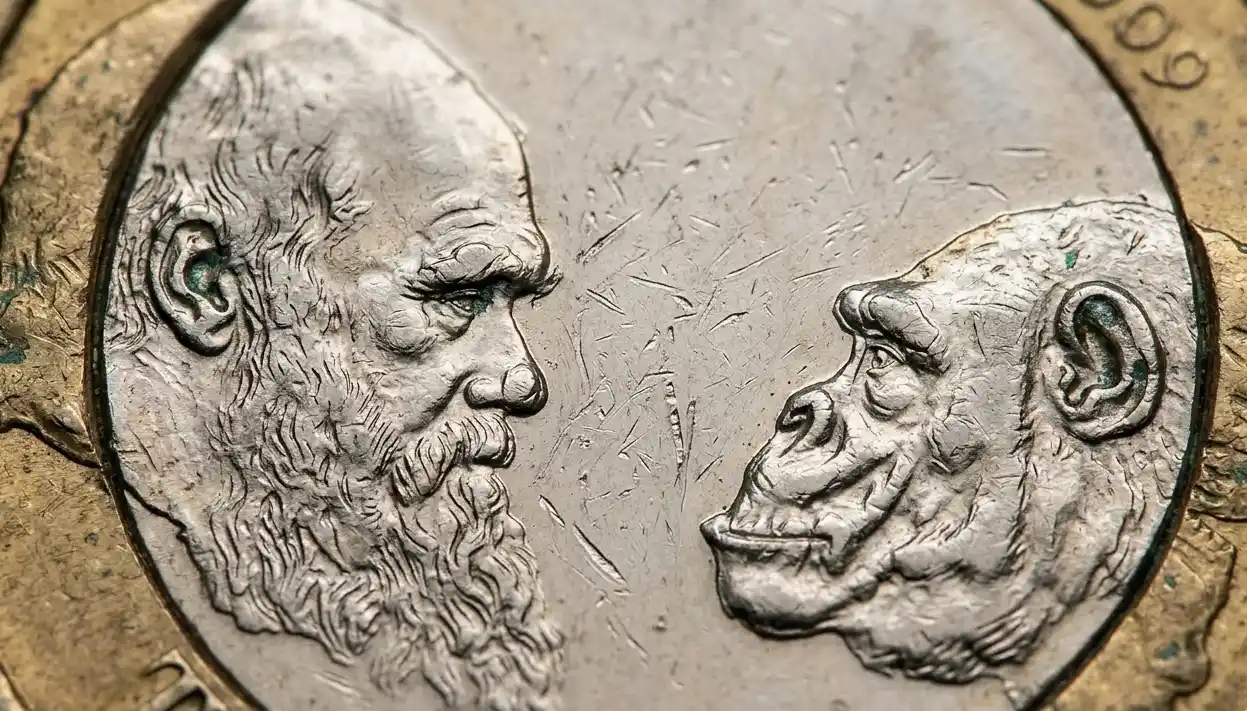
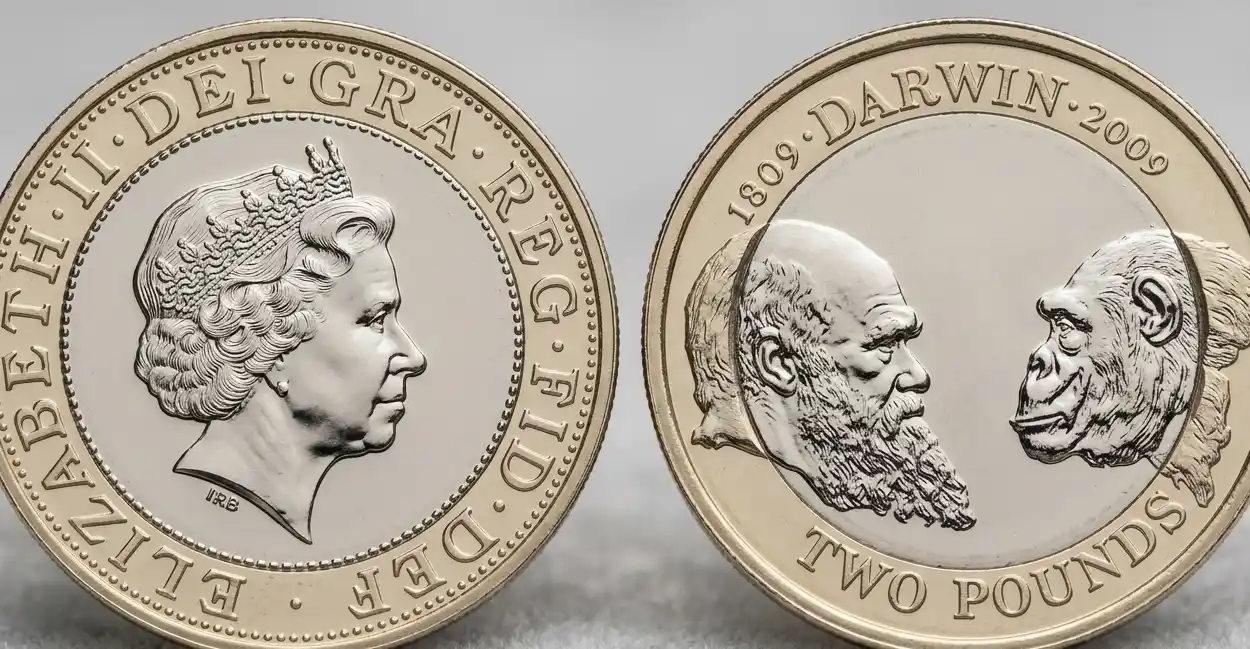
Issued in 2009, this specific release marks the bicentenary of Charles Darwin’s birth.
Currency units of this type maintain legal tender status across the United Kingdom.
Market valuation regarding these specimens depends strictly on physical condition.
Recovering the Darwin 2 pound coin value in the current year relates to general inflation increases.
| Release Category | Total Mintage Volume |
| Circulation | 3,903,000 |
| Brilliant Uncirculated | 146,413 |
| Silver Proof | 11,885 |
| Silver Piedfort | 3,115 |
| Gold Proof | 1,000 |
Exceeding the three million mark places this coin in the common category.
Probability of receiving such a specimen in change during 2026 stands at 0.04% of the total £2 coin mass.
Technical Specifications of the Item
Adhering to weight and size standards ensures coin functionality in vending machines.
Production involves striking bimetallic blanks using high-pressure presses.
| Parameter | Value |
| Mass | 12.00 grams |
| Diameter | 28.40 millimeters |
| Thickness | 2.50 millimeters |
| Outer Ring | Copper-nickel alloy |
| Inner Disc | Nickel-brass alloy |
Edge lettering on the coin contains the inscription ON THE ORIGIN OF SPECIES 1859.
Placement of text on the rim varies relative to the heads side.
Value Analysis of Standard Circulation Coins
Fine condition characterizes coins showing visible signs of wear and tear.
Scratches and bag marks appearing on the surface reduce buyer interest.
Prices for such specimens in 2026 fluctuate within a narrow range.
- Minimum price: £2.50
- Average price: £3.10
- Maximum price: £4.00
Dynamics showing price changes over the last three years:
2024 → £3.20
2025 → £3.00
2026 → £3.10
Lowering prices in 2025 resulted from several large private collections entering the market.
Percentage change in price over the year reached +3.3%.
Brilliant Uncirculated Quality Specimens
Coins belonging to this category never entered mass circulation.
Sales occurred through special presentation folders provided by the Mint.
Lacking mechanical damage ensures a high grade during professional evaluation.
Current market value ranges from £12.50 to £18.00 per specimen.
Keeping original packaging adds 15% to the final transaction amount.
Damaging the plastic blister leads to an automatic 20% loss in value.
Annual price growth for this category remains at 4.5%.
Investment Segment: Precious Metals
Releasing coins made of silver and gold targets long-term storage.
Value regarding these assets correlates with global metal market rates.
Numismatic premium adds 25% on top of the raw metal price.
- Silver Versions: Mass of the silver coin equals exactly 12.00 grams.
Using 925 grade silver serves as the primary material for this strike.
Price in 2026 → £55.00 – £70.00
Piedfort versions featuring double thickness weigh 24.00 grams.
Piedfort price in 2026 → £110.00 – £145.00
- Gold Versions: Mass of the gold coin equals 15.97 grams.
Implementing 22-carat gold follows the standard for the Proof series.
Record auction price achieved in London during January 2026 reached £1,380.00.
Price changes for the gold version by year:
2023: £1,150.00
2024: £1,240.00 (+7.8%)
2025: £1,310.00 (+5.6%)
2026: £1,380.00 (+5.3%)
Mint Errors and Production Defects
Technical failures occurring at the Mint create unique specimens.
Such coins receive valuations significantly higher than face value.
Identifying error authenticity requires professional expertise.
Main defect types for the 2026 market:
- Off-center inner disc relative to the ring → £80.00 – £150.00
- Missing edge lettering → £250.00 – £400.00
- Double struck design → £500.00 – £900.00
Upside-down lettering on the rim does not constitute an error.
Manufacturing processes allow two variations of text orientation.
Possessing this feature does not influence the market price.
Factors Shaping Market Price
Interaction between supply and demand determines the final cost.
Strict criteria exist for evaluating any given lot.
- Surface preservation degree
- Presence of toning or oxidation
- Completeness of original sets
- Provenance or ownership history
Condition and price correlation:
UNC condition → 100% of market price
EF condition → 60% of market price
VF condition → 30% of market price
Fine condition → 12% of market price
Price drops when moving between categories average 40%.
Regional Circulation Features in 2026
Geographical location influences the frequency of encountering the coin.
Large financial centers show higher encounter rates due to rapid cash turnover.
| Region | Finds per 10,000 coins | Average local sale price |
| London | 6 | £3.50 |
| Manchester | 4 | £3.10 |
| Birmingham | 3 | £2.90 |
| Edinburgh | 5 | £3.30 |
Price differences between regions reach 20%.
Shipping costs for private sellers often neutralize this gap.
Professional Certification Procedures
Verifying authenticity eliminates the risk of buying fakes.
Organizations like NGC and PCGS conduct grading using the Sheldon scale.
Assigning a numerical value from 1 to 70 standardizes the evaluation.
Certification service costs in 2026:
- Basic tier: £35.00
- Express processing: £60.00
- Insurance fee: 1% of appraised value
Grading becomes logical when expecting a level of MS66 or higher.
Certified coins sell 45% faster than unslabbed lots.
Plastic holders protect the metal from oxygen exposure.
Comparison with Similar 2009 Issues
Other commemorative coins entered circulation during this same period.
Comparing these helps understand Darwin’s demand context.
| Coin | Mintage | Price in 2026 |
| £2 Darwin | 3,903,000 | £3.10 |
| £2 Robert Burns | 3,253,000 | £3.80 |
| 50p Kew Gardens | 210,000 | £190.00 |
Low mintage for Kew Gardens creates a permanent shortage.
Darwin’s mintage ensures total coverage of collector demand.
Price stability for Darwin remains higher due to the absence of speculative bubbles.
Storage Conditions and Degradation Risks
Metals used in coin production undergo chemical reactions.
Air humidity triggers the appearance of dark spots.
Storing coins correctly prevents financial losses.
Using PVC-free coin holders remains mandatory.
Skin contact leaves greasy residues on the surface.
Acids found in fingerprints destroy the original mint luster.
Luster loss reduces the grade by 2 points on the Sheldon scale.
Professional restoration services cost £15.00 per unit.
Cleaning coins yourself using abrasives destroys all numismatic value.
Counterfeit Identification Methods in 2026
Rising prices for rare variants stimulate the production of fakes.
Modern counterfeits possess high visual similarity to originals.
Verification requires using precise instruments.
- Digital scales with 0.01g increments
- X-ray analyzers for metal composition
- Free coin value checker app
Weight discrepancies of 0.50 grams indicate a fake.
Lacking sharp lines in Darwin’s beard signifies a casting process.
Magnetic properties should be absent in the center disc.
Attraction to a magnet confirms the use of a steel core.
Online Auction Dynamics
eBay remains the primary indicator of real-time demand.
Approximately 1,200 transactions involving this coin occur monthly.
Completed listing rates stand at 78%.
Average bid count for lots in UNC condition reaches 12.
Circulated coins typically attract 2 bids.
Selling at a fixed price results in 10% higher returns than auctions.
Platform fees reach 13% of the total transaction sum.
Asset Liquidity on the Secondary Market
Converting coins into cash quickly varies by type.
Selling a gold coin takes between 1 and 3 business days.
Realizing a circulated coin through a dealer requires a 40% discount.
Selling independently to an end buyer takes up to 14 days.
High liquidity characterizes certified specimens.
Lacking documentation slows down the verification process by the buyer.
Search Query Statistics in 2026
User interest online reflects future price dynamics.
Google Trends and the best coin value app data shows interest peaks during holiday periods.
Search volume for “Darwin 2 pound coin” rose by 25% in December.
Primary buyer demographic groups:
- Beginning collectors (18-35 years): 45%
- Experienced numismatists (35-60 years): 35%
- Metal investors (40+ years): 20%
Younger audiences prefer coins found in circulation.
Older generations focus on the Proof segment.